
Air / Gas Ratio Regulator – Axis 1218
Enquiry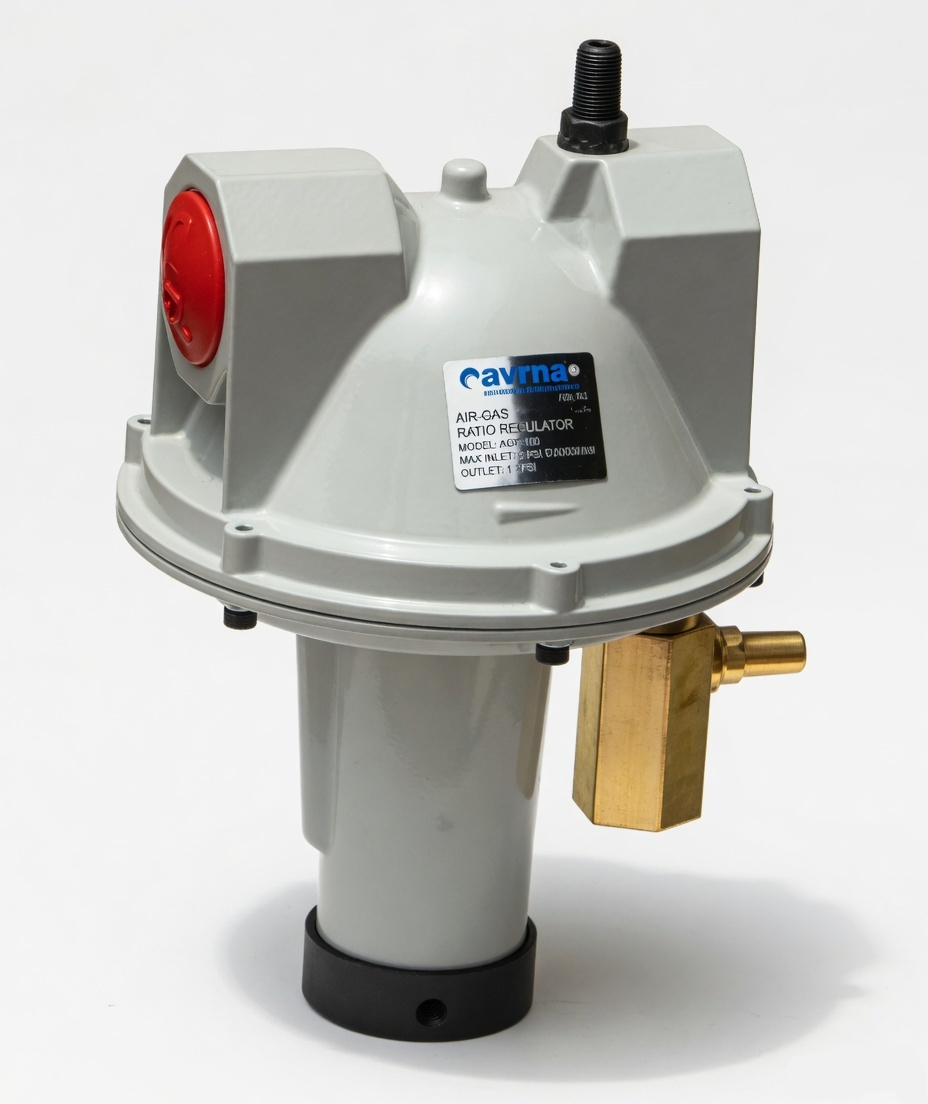
Axis 1218 regulators accurately maintain a constant air/gas ratio over a wide range of firing rates in both nozzle-mix and premix gas burner systems.
The capacities below are given in cfh with 2 OSI drop through regulator gas gravity.
| Regulator Designation | 0.4 | 0.6 | 1.5 | 2.0 |
|---|---|---|---|---|
| 1218-0 | 300 | 250 | 150 | 135 |
| 1218-1 | 500 | 400 | 250 | 225 |
| 1218-2 | 1000 | 800 | 500 | 450 |
| 1218-3 | 1500 | 1200 | 775 | 675 |
| 1218-4 | 3000 | 2400 | 1500 | 1350 |
| 1218-5 | 5000 | 4000 | 2500 | 2250 |
| 1218-6 | 7350 | 6000 | 3800 | 3300 |
| 1218-7 | 13400 | 11000 | 7000 | 6000 |
Nozzle-Mix Burners
When used with nozzle-mix burners, the vent of a 1218 regulator is cross-connected to the main air line downstream of the control valve. Regulator outlet pressures then equal air impulse pressures, and gas flow remains proportional to air flow at all firing rates.
One regulator can be used for several burners controlled by the same air valve, but often it is better to have a separate regulator for each burner.
Dual-Fuel Burners
When a dual-fuel burner’s atomizing air is left on during gas operation, the 1218 regulator can be set to compensate for the extra air (over the controlled main air) by adjusting the spring for up to 1 OSI “leak” with no impulse pressure.
Premix Burners
With its vent open to atmosphere, a 1218 regulator can be used as an atmospheric regulator (zero governor) to supply gas to an aspirator mixer feeding premix burners.
If burner nozzles are sealed-in and furnace pressure is other than atmospheric, the regulator vent must be connected to the combustion chamber. Controlled “zero” gas pressure will then match furnace pressure — this is necessary to maintain the same air/gas ratio at all firing rates. A separate regulator for each mixer is preferred to avoid interference or interaction.