HF Burner 001
Enquiry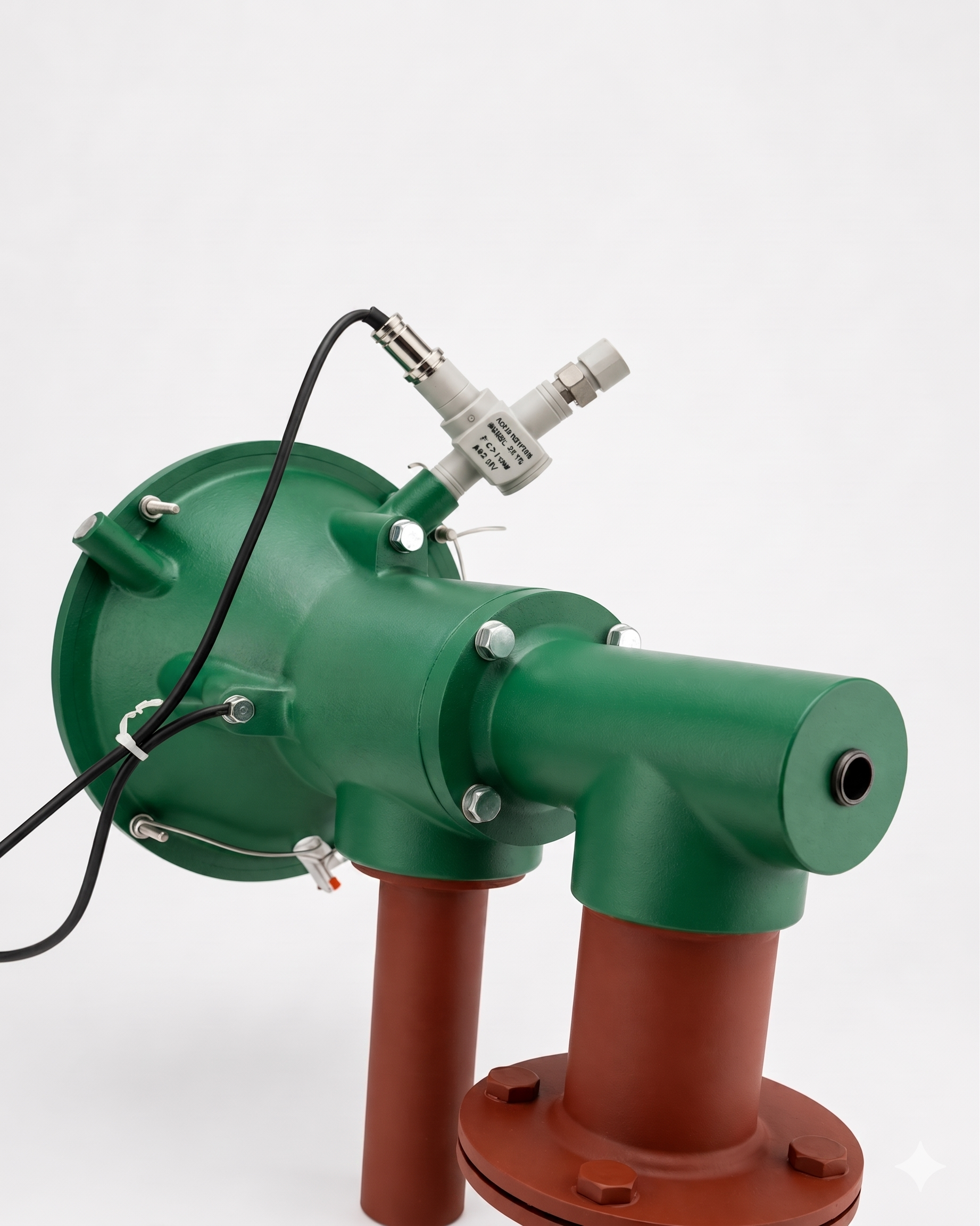
Hot Air Burners are used on steel reheat furnaces, glassmelters, non-ferrous melters, rotary calciners, and other applications where low velocity luminous flames are desired. They use combustion air at temperatures up to 600°C. They burn gases of 2000 kcal/scf or higher and light or heavy fuel oils.
Gas As A Fuel
001 Burners provide soft luminous flames when burning natural or coke oven gas in large open furnaces, such as slab or billet heaters. Flame shapes depend on forward velocity of the burning gases.
Although rated nominally at 4.5"wc (550°C) air, flames tend to develop full length at combustion air pressures of 2–3"wc at the burner.
Gas flames are stable when starting with ambient temperature combustion air in cold, tight chambers; but well defined flame shapes may not develop until air is over 200°C. For stoichiometric firing, required natural gas pressure at the burner varies from approximately 60% of main air pressure with 10°C air to approximately 25% of air pressure with 550°C air. Retract the oil atomizer during gas operation.
Oil As A Fuel
Standard 001 Burners use high pressure "tip emulsion" atomizers with 5 to 6 kg/cm² steam or compressed air. Resultant clean, highly luminous, well-defined flames are slightly shorter than natural gas flames.
Heavy oils (#4 through #6) must be heated to reduce viscosity to 100 SSU or less at the burner. This atomizer is highly efficient, consuming less than 5 kg/cm², or 20 ft³ of 80 psi air of #6 oil burned.
Air liable low pressure atomizer, using 40–70"wg cold air supplied by a turbo blower, is available for most grades of oil when steam or compressed air is unavailable.
Control Systems
001 Burners operate from 0.2"wc main air pressure to 10"wc or higher. High fire air rate usually is between 2"wc and 6"wc.
Input and air/fuel ratio controls should be selected and engineered for the range ability required. If combustion air temperatures vary considerably during normal operating cycles, metered flow control with air temperature compensation is recommended.
Recuperator leakage can cause significant distortions and variations in air/fuel ratio when "cold lead metering" is used.
Ignition And Flame Supervision
A Pilot assembly is normally used to light the burner. Ignition sequence should provide for low fire start between 0.2 and 1.0"wc main air pressure.
Pilot mixture pressure should be 3"wc or more. The Honeywell UV detector has been tested on 001 Burners.
| Burner Size | Main Air scfh | Oil l/hr | Atomizer | Oil Flowrate | kg/lt | No Oil | scfm | No Oil |
|---|---|---|---|---|---|---|---|---|
| -8A | 19000 | A56 | 002-01 | 50.6 | 0.902 | 22 | 7.7 | 13.3 |
| -9A | 32200 | A23 | 002-01 | 41.8 | 0.45 | 22 | 6.3 | 13.3 |
| -10AA | 40000 | A29 | 002-01 | 37.4 | 0.32 | 22 | 5.7 | 13.3 |
| -11AA | 53000 | A38 | 002-01 | 33.0 | 0.21 | 22 | 5.0 | 13.3 |
| -12A | 78000 | A56 | 002-1 | 176.0 | 0.78 | 77 | 26.7 | 46.7 |
| -14A | 106000 | A76 | 002-0 | 167.2 | 0.55 | 140 | 25.3 | 46.7 |
| -16A | 134000 | A96 | 002-0 | 143.0 | 0.37 | 140 | 21.7 | 46.7 |
| -18A | 172000 | A123 | 002-1 | 396.0 | 0.80 | 225 | 60.0 | 75.0 |
| -20A | 215000 | A154 | 002-1 | 352.0 | 0.57 | 225 | 53.3 | 75.0 |
| -22A | 260000 | A186 | 002-1 | 330.0 | 0.44 | 225 | 50.0 | 75.0 |
| -24A | 310000 | A221 | 002-3 | 1210.0 | 1.36 | 680 | 183.0 | 220.0 |